
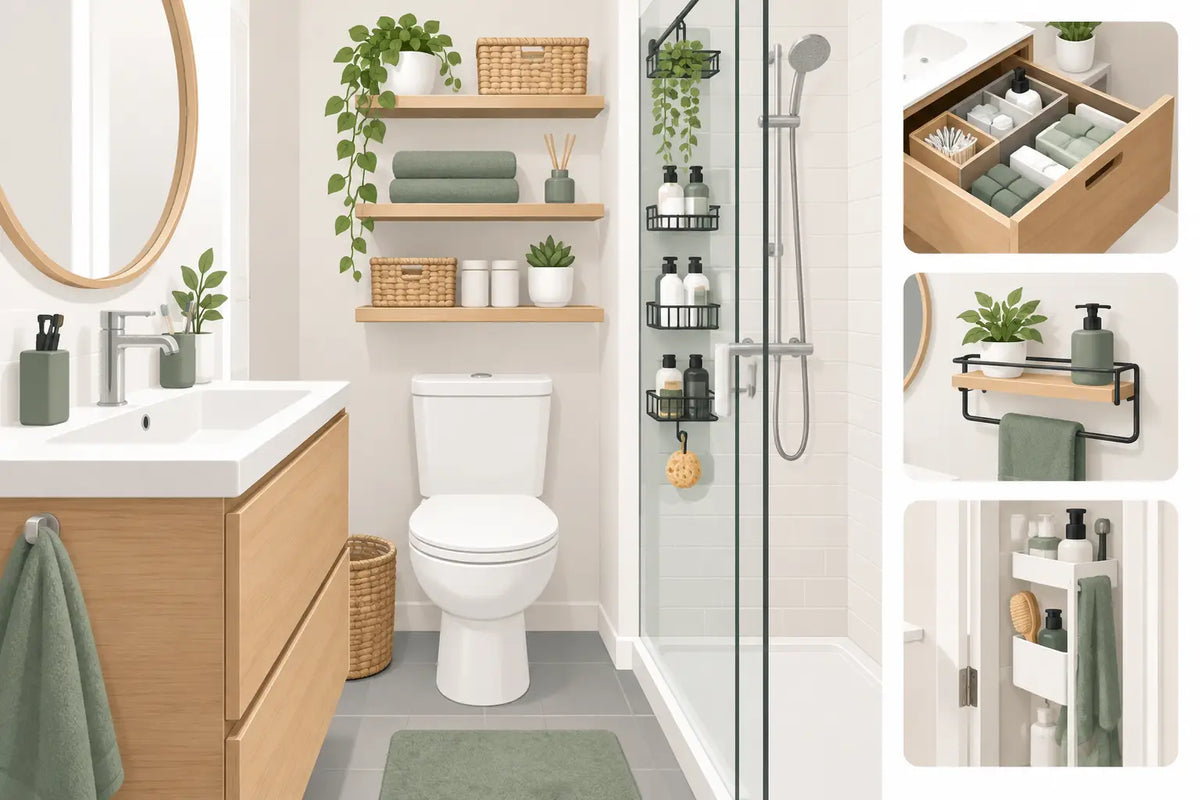
In a small bathroom, clutter rarely builds up because people aren’t trying hard enough. It usually happens because every product doesn’t have a designated place. The best small bathroom storage ideas aren’t about adding furniture everywhere: they make use of vertical space, walls, and often-overlooked areas without making the decor feel heavy.
Good planning starts with a simple rule: keep clearance around the toilet, shower, and sink. A room feels immediately larger when the floor remains visible and everyday items are stored within easy reach. Here are durable solutions that are easy to incorporate into both a renovation and an already-finished bathroom.
1. Choose a wall-mounted vanity
A wall-mounted vanity is one of the most effective choices for a small bathroom. By freeing up the floor, it makes the room feel more spacious and easier to clean. It also provides concealed storage for less attractive items: extra toilet paper, a hair dryer, cleaning products, or personal care items.
Choose a model with drawers rather than one large empty cabinet. Drawers let you see what’s inside at a glance and prevent items from being forgotten at the back of the unit. In a very narrow bathroom, a shallower vanity may be more comfortable than a standard model: gaining a few centimeters of clearance makes a real difference.
The trade-off is storage capacity. A compact vanity cannot replace a family linen closet. It should therefore be paired with well-planned wall storage for towels and extra supplies.
2. Install a shower niche
Bottles lined up on the edge of the bathtub or on the floor quickly make the space feel cluttered. A built-in shower niche solves this problem without taking up space in the washing area. It keeps shampoo, conditioner, and soap within easy reach while giving the room a clean, contemporary finish.
To keep it practical, plan a width that suits the number of users and a height that means you don’t have to bend down. A horizontal niche works well in a family shower, while a vertical design can be more discreet in a narrow shower. A built-in shelf or two compartments also make it easier to separate products for adults and children.
Planning is essential: the niche must be installed before the wall is finished and properly waterproofed. It’s a technical detail, but it protects the structure and ensures the renovation lasts.
3. Choose a mirror with built-in storage
The wall above the sink is too valuable to hold only a mirror. A shallow mirrored cabinet adds closed storage right where small items are used: toothbrushes, medication, skincare products, makeup, and shaving supplies.
Look for a model with a reasonable depth so it doesn’t get in the way in front of the sink. Adjustable shelves make it easy to organize containers of different sizes. An LED mirror adds useful lighting for morning routines and can help avoid adding multiple light fixtures in a small room.
If the bathroom gets very steamy, choose a solution designed for this environment and avoid overcrowding the shelves. A well-organized mirror looks elegant, even when opened.
4. Make use of the space above the toilet
L’The wall space above the toilet often goes unused. Yet it can hold a slim cabinet, closed shelves, or a shallow column. It’s the ideal spot for toilet paper rolls, tissues, clean washcloths, and less frequently used products.
In a modern bathroom, a closed cabinet creates a calmer look than a series of open baskets. Open shelves are still a good option if you have limited storage, but keep them to folded towels and a few matching containers. Too many items on display detract from the sense of space you’re trying to create.
Leave enough space between the toilet and the first storage unit to ensure comfort. The unit should also be securely attached to the wall, especially in a family home.
5. Plan for a slim storage column
When the layout allows, a tall, narrow cabinet can replace several small, scattered accessories. Installed near the vanity or in an empty corner, it can hold towels, spare products, and hair-styling tools without taking up much floor space.
A solid door conceals its contents and protects textiles from dust. A mirrored door can also make the room look larger, but it needs more frequent cleaning. Above all, check the clearance needed to open the door. In a tight passage, drawers or a sliding door may be more suitable.
6. Add hooks instead of a bulky towel rack
In a small room, a large wall-mounted towel rack isn’t always the best use of space. Hooks placed behind the door, on a clear wall, or near the shower can hold towels without protruding too much.
Plan for one hook per user, plus one or two extras for after showers. Choose moisture-resistant models secured to a sturdy backing. Accessories coordinated with the plumbing fixtures - matte black, chrome, or brushed nickel - create a cohesive look without requiring major renovations.
7. Organize the inside of drawers
A well-divided drawer often holds more than a cluttered shelf. Use dividers to create simple zones: dental care, shaving, makeup, hair, and first aid. Small removable bins are especially practical because they’re easy to clean if a product spills.
Avoid storing all your supplies there. A drawer should meet everyday needs, not become a storeroom. Keep only one spare product of each type in the bathroom and put the rest elsewhere if possible.
8. Use the back of the door wisely
L’s back can hold a slim organizer, hooks, or a lightweight bar. This solution works well for soft accessories, bathrobes, and towels, but it is not ideal for heavy bottles that may shift every time the door opens.
Before installing anything, check the clearance between the door and the wall. In a very compact space, a hook that is too thick can prevent the door from opening fully. A simple detail, but costly to fix after installation.
9. Reduce visible packaging
Storage doesn’t depend solely on furniture. Oversized containers, expired products, and duplicates take up a surprising amount of space in a small bathroom. Sort through everything before choosing a vanity or tall cabinet: you’ll size your storage to suit your actual needs, not the contents you’ve accumulated.
For products used every day, refillable dispensers and a few matching containers can make the countertop look less cluttered. This approach works especially well for soaps, bubble bath, and cotton pads. However, keep the labels or original packaging for medical products to avoid any confusion.
10. Keep the countertop almost clear
A clear countertop instantly makes a small bathroom feel larger. Leave out only the items used several times a day, such as hand soap and a toothbrush. Everything else should go in the mirrored cabinet, drawers, or niche.
If several people use the same sink, a small tray can keep essentials together instead of scattered around. It’s easy to remove for cleaning the surface. It’s a simple solution, but it keeps everyday storage from becoming an ongoing project.
Small bathroom storage ideas to plan before the renovation
Some solutions can be added in just a few minutes, while others need to be decided on before the plumbing, tiling, and electrical work. Before you start, measure the room and note the clearance needed around openings. Also consider the location of outlets, the direction the door opens, and the position of the drain in the shower.
To make the right choices, check these four points:
- the actual depth of the vanity and mirrored cabinet;
- the space available to open doors and drawers;
- the number of towels, products, and users to plan for;
- the type of storage to incorporate before finishing the walls.
