
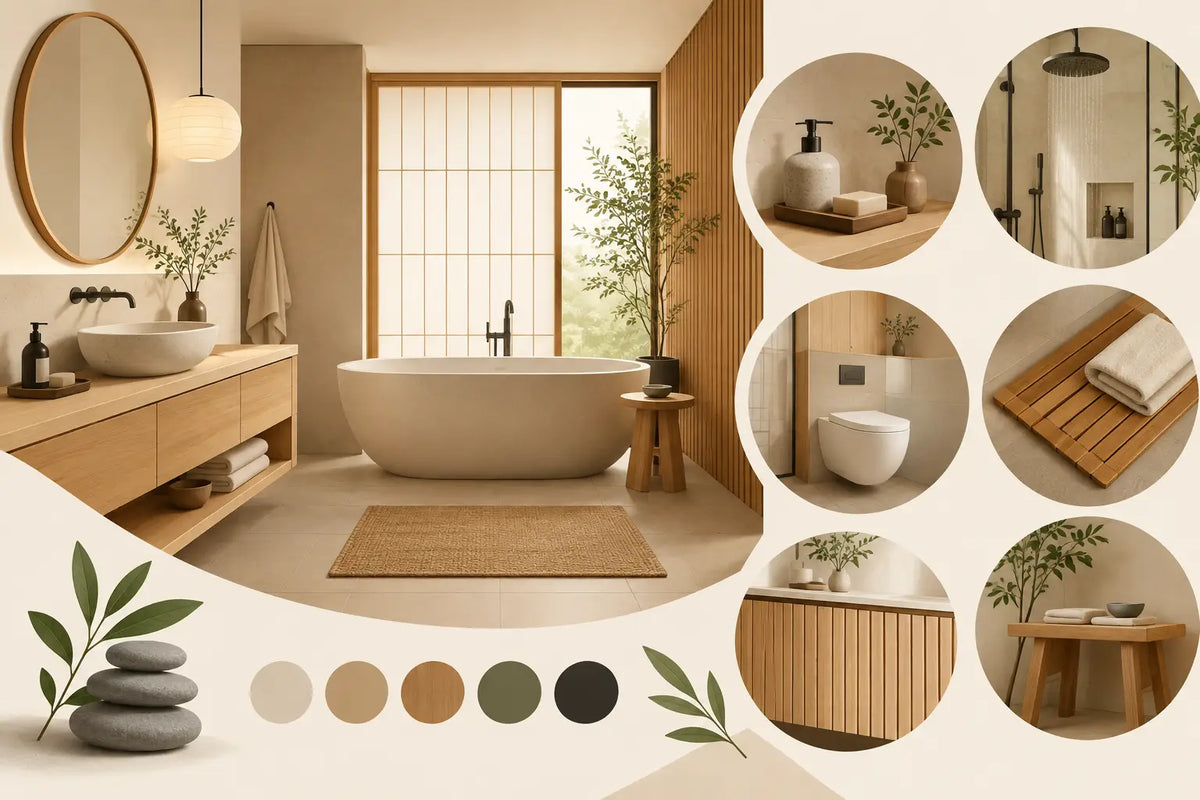
A successful bathroom doesn’t depend on an accumulation of luxurious finishes. It relies on choices that work well together, feel good to use every day, and stand the test of time. Japandi bathroom style answers this search for balance perfectly: it blends Japanese simplicity with the functional warmth of Scandinavian design.
The result is neither cold nor overly decorated. It’s a bright, organized, calming room where every element has a clear purpose. Whether you’re doing a full renovation or a targeted update, this style helps you choose a vanity, shower, faucets, and accessories that come together in a lasting design.
The basics of Japandi bathroom style
Japandi favors simple shapes, authentic materials, and a natural color palette. Light wood, matte ceramic, stone, clear glass, and black or brushed metal fit right in. L'The goal is to create visual calm without making the room feel impersonal.
In a bathroom, this style works particularly well because it emphasizes organization. Closed cabinets reduce clutter, clean lines simplify maintenance, and carefully chosen materials add warmth to a space often dominated by white ceramic.
Balance is key. An all-white bathroom with a wooden vanity can evoke Japandi style, but it will gain depth with a mineral texture, a mirror with soft contours, or contrasting-finish faucets. Conversely, too much wood, too many baskets, and too many decorative objects can quickly detract from the uncluttered look you want.
1. Start with a natural, light-filled palette
Off-white, sand beige, greige, stone gray, and clay tones make an excellent base. These colors diffuse light well and create a sense of spaciousness, a welcome advantage in condo bathrooms or rooms without a large window.
Matte black can bring structure to the design. Used on handles, faucets, a shower door frame, or a light fixture, it creates clean lines without dominating the space. For a softer look, brushed nickel, brushed chrome, or pale bronze offer an elegant alternative.
Avoid adding too many accent colors. In a Japandi design, contrast comes more from textures than bright hues: subtle wood grain, a tile’s matte finish, wall relief, or the softness of bath linens.
2. Choose a simple, well-designed vanity
The vanity is often the first element to set the tone. A wall-mounted model in light oak, natural wood effect, or matte taupe works very well with this style. Flat-front cabinets, integrated handles, or slim pulls enhance visual continuity.
Before choosing the finish, measure the available clearance. A double vanity is practical in a family bathroom, but it isn’t automatically the best choice. In a narrow room, a wider single vanity paired with a large mirror and deep drawers can be more functional and visually lighter.
Choose storage that makes your routine easier: drawers with dividers, space for towels, and a vanity deep enough to conceal essentials. Japandi doesn’t mean living with less comfort. It means making room for what you actually use.
3. Opt for a streamlined shower that’s easy to maintain
A frameless glass shower, or one with a subtle black frame, naturally complements this style. Clear glass lets you see the wall finish, opens up the view, and avoids splitting the room in two. A white, beige, or stone-effect shower base maintains a clean, timeless look.
For walls, large-format tiles reduce the number of grout lines and create a calmer surface. A textured tile in a warm tone adds character without requiring a busy pattern. A recessed niche is also a very smart choice: it keeps bottles within reach while freeing up the shower base ledge.
An open shower can be striking, but it requires careful planning of the slope, drainage, and dimensions to limit splashing. In many residential projects, a well-fitted shower door remains the most practical everyday solution, especially when the bathroom is shared.
4. Add character with faucets
Matte black faucets are a japandi classic. Their contrast highlights a white sink or light wood vanity while maintaining a contemporary look. Brushed finishes have an advantage in some homes, however: they generally show fewer fingerprints and blend easily into a softer atmosphere.
Consistency matters more than matching everything. Ideally, the sink faucet, shower column, shower door handle, and accessories share the same finish or belong to the same visual family. This creates a more polished result, even when the renovation is done in stages.
Beyond the finish, check the cartridge quality, availability of parts, and warranty. A beautiful faucet with controlled flow, smooth operation, and durable construction is a more worthwhile investment than a model chosen solely for its color. At Voda, cartridges with a lifetime warranty offer tangible peace of mind when making this kind of decision.
5. Choose soft shapes for the sink and mirror
Japandi style favors restrained curves. An oval vessel sink, an integrated sink with rounded lines, or a mirror with soft corners can soften the straight surfaces of the vanity and shower. These elements make the overall look more welcoming without making it overly decorative.
An LED mirror is especially useful when general lighting is limited. Choose a light bright enough for shaving, makeup, and skincare, while avoiding a bluish cast. A warm to neutral color temperature is often more flattering and relaxing than very cool lighting.
In a small room, a large mirror can replace several wall decorations. It reflects light, visually enlarges the space, and follows the japandi principle that a room feels more open when it isn’t cluttered.
6. Add texture without overwhelming the space
Texture is essential when the palette is intentionally subdued. Consider stone-look tile, a wood-grain vanity, thick towels in a natural tone, or a cotton bath mat with visible fibers. Two or three carefully chosen textures are more than enough.
Accessories should remain useful. A heated towel rack can both dry towels faster and add a welcome touch of comfort in winter. A simple soap dispenser, a treated wood tray, and a few matching containers help keep the countertop tidy.
A plant can work if the room’s light and humidity are suitable. Otherwise, it’s better not to force greenery into the space. Japandi doesn’t prescribe a specific decor; it aims for a sense of calm achieved through thoughtful materials and well-managed storage.
7. Design a space that lasts, not just one that looks good in photos
Trends can guide a project, but permanent features should be chosen for their longevity. A sturdy shower base, a well-designed glass door, moisture-resistant drawers, and reliable faucets will have a greater impact on your satisfaction than a highly distinctive decorative detail.
Think about the practical upkeep, too. Matte finishes are refined, but some require regular cleaning to maintain their appearance. Natural wood needs to be suitable for a humid environment, while a high-quality wood-look finish can offer a warm appearance with fewer concerns. There’s no single right answer: it all depends on how the bathroom is used, how many people use it, and how much time you want to spend maintaining it.
Before finalizing your selection, look at the products together rather than in isolation. The vanity, faucet, mirror, shower, and accessories should speak the same visual language. Start with the permanent elements, then let textiles and small accessories complete the atmosphere. That’s how a Japandi bathroom becomes a space that’s as pleasant to use as it is to look at, morning after morning.
