
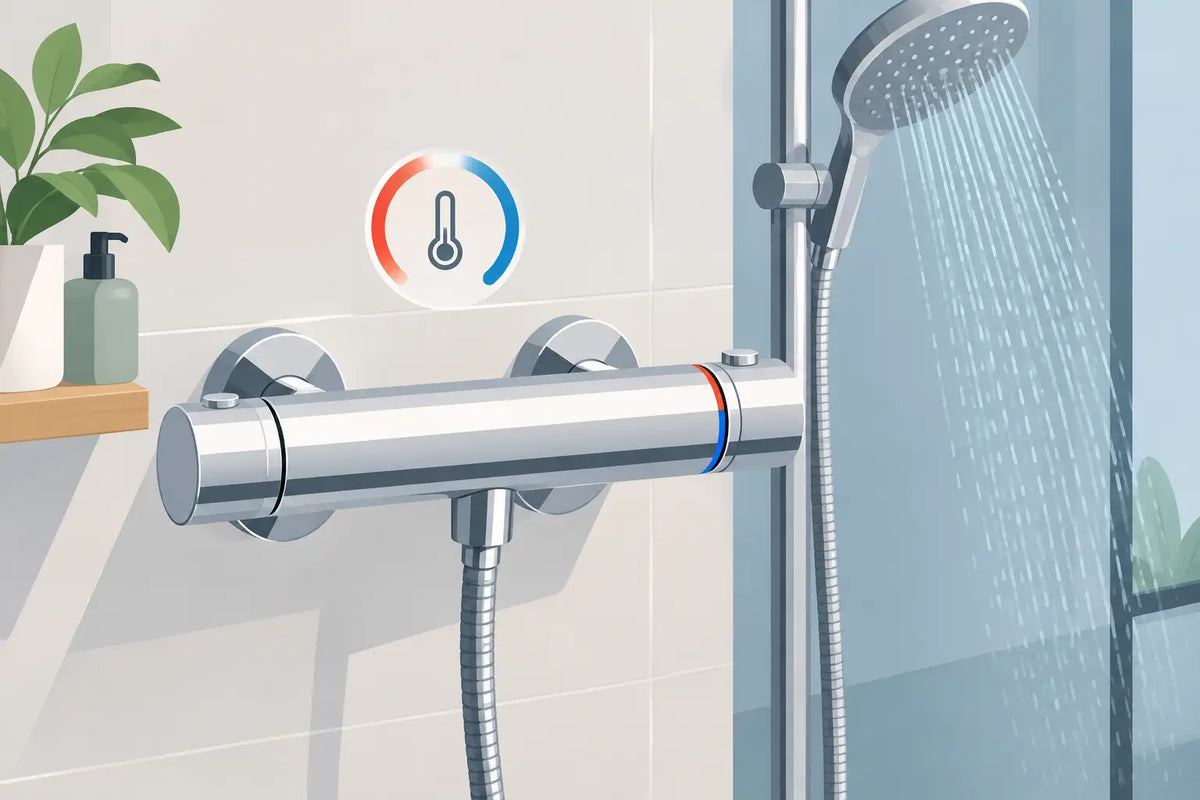
A shower that suddenly turns ice-cold when someone flushes the toilet, or too hot when a faucet is turned on elsewhere in the house, can ruin an otherwise simple moment. Our verdict on thermostatic shower valves is clear: they’re an excellent choice for improving comfort and safety, provided you choose a model compatible with your plumbing and don’t overlook cartridge quality.
Thermostatic shower valve review: is it a good buy?
A thermostatic valve maintains your chosen water temperature, even when the pressure or flow of hot and cold water varies in your home. Set the temperature once, then adjust the flow without having to find the right balance every time you shower. This is especially useful in a family home, a condo shared by several people, or a bathroom where the plumbing is used at different times of day.
Its main advantage is consistency. A thermostatic cartridge automatically mixes hot and cold water to compensate for changes in the pipes. This makes the shower more comfortable and safer. Most models also have a safety stop at around 38 °C, helping reduce the risk of scalding for children, seniors and anyone with sensitive skin.
The benefits are aesthetic and practical, too. In a modern shower, a concealed thermostatic system lets you control the temperature, flow and sometimes other functions separately. It’s easy to switch from a rain showerhead to a hand shower, or use both when the system allows it. The result looks cleaner on the shower wall and is easier to use every day.
That said, a thermostatic valve isn’t automatically the best solution for every project. It generally costs more than a pressure-balanced valve, and a concealed installation requires more planning. For a full renovation, this investment often makes sense. For a quick replacement of existing fixtures without opening the walls, an exposed solution or a pressure-balanced valve may be more practical.
Thermostatic or pressure-balanced?
Both types of faucets help provide a more stable shower, but they work differently. A pressure-balancing faucet mainly compensates for changes in water pressure. If someone uses cold water elsewhere in the house, it also reduces the hot water to maintain a similar mix. It limits sudden fluctuations, but the temperature may still vary slightly.
A thermostatic faucet, on the other hand, responds to the actual temperature of the mixed water. It continuously adjusts the proportion of hot and cold water to maintain the selected setting. It is the most comfortable option when you want a precise, consistent temperature, especially with a rain shower or a system with multiple water outlets.
The choice therefore depends on the project. A pressure-balancing faucet is a good fit for a secondary bathroom or a tighter budget. A thermostatic model is better suited to a primary shower, a high-end bathroom, or a space where everyday comfort matters as much as design. In either case, the quality of the valve and cartridge remains essential to long-lasting performance.
What to check before buying
Shower configuration
Before choosing a matte black, chrome, or brushed gold finish, decide which water functions you want. A simple shower with a fixed showerhead requires fewer components than a set with a hand shower, rain showerhead, and body jets. Some thermostatic faucets control two or three outlets, while others require a separate diverter.
You should also check whether multiple functions can operate at the same time. Using a rain head and a hand shower at once creates a more immersive experience, but requires sufficient flow. If the water pressure is low or the water heater has limited capacity, this setup may disappoint despite the high-quality faucet.
Compatibility with existing plumbing
In new construction or a renovation where the walls are open, a concealed system is easy to plan. In an existing bathroom, access to the pipes and wall depth should be assessed before purchasing. The rough-in valve, installed behind the wall, must match the trim you choose. These components are not always included together.
Also check the hot water supply, available water pressure, and type of water heater. A thermostatic faucet does not create flow or make up for an inadequate water heater. It stabilizes the mix, improving the shower experience, but the installation’s fundamentals must be adequate.
For more complex projects, consulting a plumber or contractor helps avoid unpleasant surprises. This is especially useful if you’re replacing a bathtub with a shower, adding jets, or changing the location of the controls.
Materials and cartridge
A brass faucet body is a reliable choice for a long-lasting installation. This material stands up well to residential use and provides a solid base for a contemporary finish. Cartridge quality is just as important: it ensures precise adjustment and keeps the thermostat working properly over the years.
Choose a product with readily available replacement parts and a clear warranty. A cartridge covered by a lifetime warranty offers real peace of mind, especially for an in-wall fixture that isn’t intended to be replaced in the short term. A good finish matters too: it should resist marks, moisture, and regular cleaning without losing its shine.
Style and ergonomics
The look should fit in with the rest of the bathroom. Chrome suits almost any decor and is easy to coordinate. Matte black creates a crisp contrast with pale ceramic, while brushed gold warms up a wooden vanity or a space with natural tones. L’ideally, coordinate the shower fixtures with the sink faucet, accessories, and shower door frames.
L’ergonomics also deserves your attention. The handles should be easy to grip with wet hands, the temperature indicators should be legible, and the diverter should be intuitive to operate. A beautiful product that is complicated to use quickly loses its appeal in everyday life.
Installation: The details that make a difference
A concealed thermostatic valve must be installed at the correct depth behind the wall finish. If the valve is too far forward or too far back, the trim may not fit properly. Follow the manufacturer’s instructions before installing the tile, wall panel or any other finish.
It’s also recommended that you flush the pipes before connecting the cartridge. Solder residue, sand or debris can damage the internal mechanism. After installation, the maximum temperature must be calibrated to the actual hot water temperature in the home. This step ensures a comfortable shower while maintaining effective protection against excessively hot water.
L’entretien remains simple. Gentle cleaning with a non-abrasive cloth is usually enough to preserve the finish. Avoid highly acidic products, scouring powders and abrasive pads. If your water is very hard, clean the showerhead and aerators regularly to maintain an even spray.
Frequently asked questions about thermostatic shower valves
Can you install a thermostatic valve with an electric water heater?
Yes. The type of water heater doesn’t prevent you from using a thermostatic valve. L’essentiel is to have a sufficiently stable hot water supply and pressure suited to the chosen shower configuration.
Does a thermostatic model use less water?
It doesn’t directly reduce water consumption. However, it avoids lengthy adjustments to reach the right temperature. Paired with a hand shower or showerhead designed for controlled flow, it can help you use water more efficiently.
What should you do if the temperature becomes less stable over time?
First, check the condition of the cartridge, whether there is mineral buildup, and the water heater temperature. In many cases, cleaning or replacing the cartridge solves the problem. That’s why access to parts and a good warranty are useful factors to consider when buying.
Choosing a thermostatic shower valve makes your shower more predictable, safer and more enjoyable. Take the time to check the configuration, valve and flow rate before finishing the installation: you’ll enjoy comfort you can feel every morning.
