
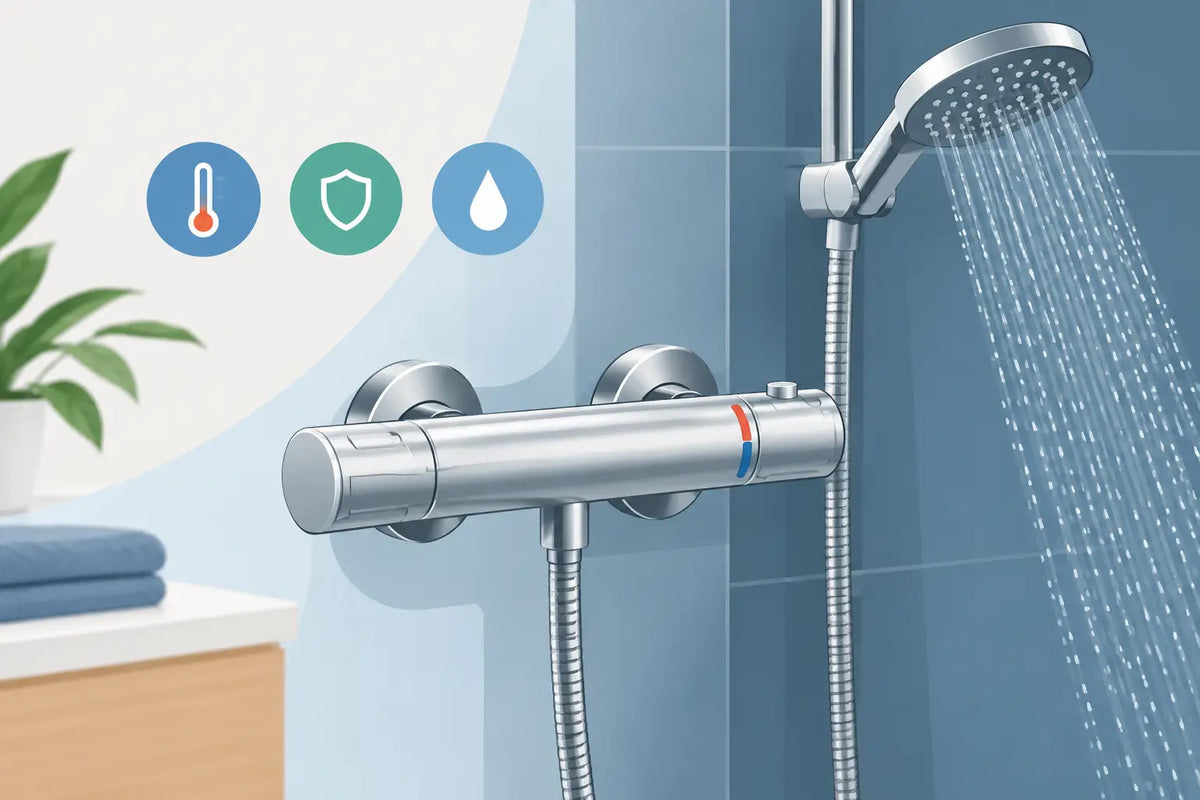
A shower that suddenly goes from cold to very hot is never pleasant, especially when another faucet is running elsewhere in the house. This guide to thermostatic faucets will help you choose a reliable solution to maintain a steady temperature, improve comfort, and reduce the risk of scalding. It’s a technical detail that can genuinely change your everyday bathroom experience.
A thermostatic faucet is suitable for both a complete renovation and replacing an aging faucet. It can be installed in a standard shower, a shower column, or a more streamlined concealed set. The right choice depends on your installation, habits, and preferred style.
What is a thermostatic faucet?
A thermostatic faucet automatically mixes hot and cold water to maintain the selected temperature. You set the temperature with one handle, often to 38 °C, then control the flow with a second control. If the hot or cold water pressure changes elsewhere in the house, the thermostatic cartridge adjusts the mix almost instantly.
This design differs from a conventional mixer faucet. With a conventional faucet, you have to manually find the right balance between hot and cold water every time you shower. The temperature can also change when an appliance draws water elsewhere in the house. A thermostatic model limits these fluctuations for a more consistent shower.
Most models include a safety button at 38 °C. You have to press it to increase the temperature, which prevents you from accidentally turning the control too far. This feature is particularly useful in households with young children, older adults, or people with reduced mobility.
Why choose a thermostatic faucet?
The first benefit is simple: comfort. Once you’ve set your preferred temperature, you don’t have to find it again every morning. This consistency is especially welcome in a family bathroom, where showers often happen one after another.
Safety matters just as much. A quality thermostatic faucet usually has an anti-scald feature that reduces or shuts off the hot water supply if the cold water is interrupted. No system replaces vigilance, but this feature provides a real added layer of safety.
It can also help you manage water consumption more effectively. Since the desired temperature is reached faster, less water is wasted while making adjustments. The savings vary depending on the installation and household habits, but they add up over time.
Finally, this type of faucet offers a more polished finish. In a contemporary shower, a concealed set with separate controls creates a clean, balanced look. For a simpler renovation, a thermostatic shower column offers the same comfort without completely reworking the plumbing behind the wall.
Thermostatic Faucet Guide: How to Choose the Right Model
Before comparing finishes or shower sprays, start with the type of installation. This is the key to avoiding unpleasant surprises during installation.
Exposed or concealed faucet
The exposed faucet is mounted on the wall and remains visible. It’s often preferred for replacements because it can limit plumbing work. Thermostatic shower columns often fall into this category: they combine the faucet, rain showerhead, and sometimes a hand shower in one set.
The concealed faucet hides the valve body and most of the plumbing behind the wall. Only the trim plate and controls remain visible. The result is more minimalist and makes surfaces easier to clean, but the installation must be planned before the walls are closed. In a full renovation or new build, it’s often the most elegant option.
Two or more functions?
Next, determine what the faucet will need to supply. A rain showerhead alone requires a simple setup. If you’d like to add a hand shower, body jets, or a tub spout, check how many outlets the valve supports and whether it includes a diverter.
A thermostatic control regulates the temperature. Another control can manage the flow or direct the water to the selected function. In more complete sets, the diverter lets you switch from the rain showerhead to the hand shower. Some systems allow two outlets to run simultaneously, but this requires sufficient flow and pressure.
Available water pressure and flow rate
A large rain showerhead is visually striking, but it won’t perform at its best if your home’s water pressure is low. Check the product specifications and ask your plumber for advice, especially in an older building or a home with several bathrooms in use at the same time.
Pipe diameter, available pressure, the water heater, and the number of open outlets all affect performance. A properly sized installation delivers a pleasant spray without compromising temperature stability. Conversely, choosing an oversized shower column for limited plumbing can lead to disappointment, even with quality fixtures.
Compatibility with your plumbing
In Quebec and Canada, connection dimensions, applicable standards, and plumbing configuration must be respected. A thermostatic faucet is not installed like a simple decorative accessory: it must be compatible with the valve body, fittings, and the location of the hot and cold water supply lines.
For a concealed shower, check whether the valve body is included with the trim. Some sets include everything you need, while others require a compatible valve to be purchased separately. Also confirm the required installation depth in the wall. A valve installed too far in or too far out can prevent a flawless finish.
Finish, materials, and care
Chrome remains a bright, versatile choice that coordinates easily with most accessories. Matte black suits bold, modern interiors, while brushed nickel softens the overall look and generally conceals water spots better. The finish should coordinate with the shower column, accessories, and other visible bathroom features, without necessarily matching every detail.
For durability, look for a body made of brass or materials designed to withstand moisture and repeated use. A quality cartridge is essential: it ensures precise adjustment and a long-lasting mechanism. At Voda, the availability of faucets with lifetime-guaranteed cartridges offers valuable peace of mind for a component used every day.
Clean the surfaces with a soft cloth and non-abrasive soap. Harsh products, scouring powders, and abrasive sponges can damage the finish, especially on matte black surfaces. If your water is hard, regularly wipe down the faucets and shower nozzles to limit buildup.
Temperature adjustment: best practices
The 38 °C safety setting is designed to provide a comfortable shower, but the displayed or perceived temperature may vary slightly depending on the installation. After installation, take the time to check the calibration. LWater should reach the expected temperature when the handle is aligned with the designated mark.
If this is not the case, cartridge adjustment may be required. This is usually a simple task for a professional, but it’s best to follow the manufacturer’s instructions rather than dismantle the mechanism at random. Incorrect adjustment can reduce comfort or the effectiveness of scald protection.
Don’t set your water heater to an unnecessarily high temperature to compensate for a shower problem. Domestic hot water that’s too hot increases the risk of scalding and can lead to avoidable energy use. The thermostatic faucet is there to stabilize the water mixture, not to correct a poorly configured hot water system.
Installation: when should you call a plumber?
Replacing an exposed shower column may seem manageable for experienced DIYers, provided the existing fittings are compatible and in good condition. However, you must ensure a perfect seal, observe the hot-cold orientation and test the unit before finishing the installation.
For a concealed valve, hiring a plumber is generally the best choice. The wall needs to be opened or prepared, the valve body securely fastened, the pipes connected, a pressure test performed and the trim installed at the correct depth. This step is too important to improvise: a leak behind a finished wall can lead to costly repairs.
A professional can also confirm whether your installation requires shut-off valves, special fittings or an adaptation to your plumbing system. Keep the product documentation and recommended spare parts. This will make maintenance easier several years down the road.
Frequently asked questions
Does a thermostatic faucet work with a bathtub?
Yes, provided you choose a valve designed to supply both a bathtub spout and a shower, or a set with a suitable diverter. Check the number of functions and the required flow rate before purchasing.
Can you replace only the thermostatic cartridge?
In many models, yes. The cartridge is a wear part that can be replaced if the temperature setting becomes unstable, the temperature no longer responds correctly or the flow rate decreases despite regular maintenance. Always use a part that’s compatible with the installed model.
Is a thermostatic faucet necessary in every shower?
No. A standard mixer can be suitable for a very tight budget or a bathroom that’s rarely used. However, for a primary shower, a family bathroom or a project focused on long-term comfort, a thermostatic faucet is an investment you’ll notice from the very first use.
Choosing a thermostatic shower faucet means giving your shower reliable temperature control, enhanced safety and a finish that suits your project. Take the time to confirm compatibility with your plumbing before choosing a design, and you’ll enjoy a setup that’s as high-performing as it is elegant, day after day.
