
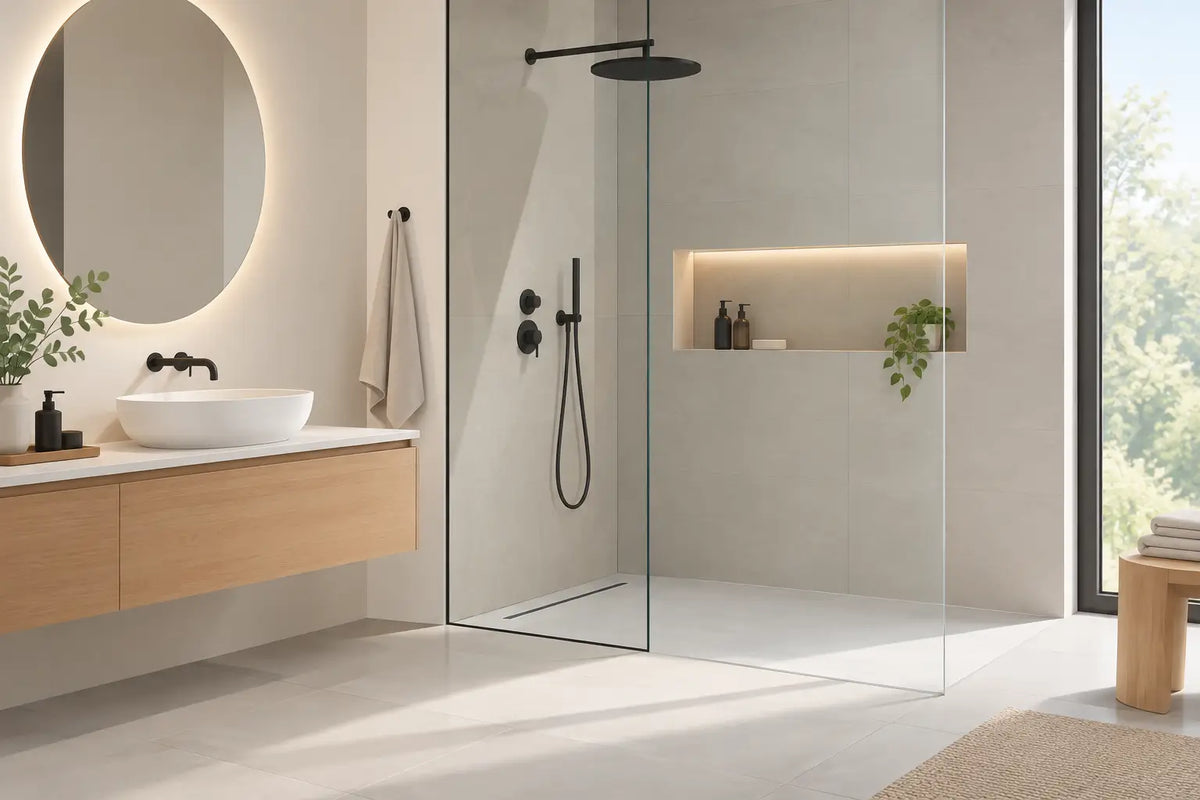
A well-designed shower can make an entire bathroom look lighter, even without changing its size. Minimalist shower trends favor open spaces, understated materials, and reliable components that make everyday use and maintenance easier. The goal isn't a cold or empty room, but a calm, functional space with a cohesive look.
For homeowners renovating in Quebec, minimalism also has a practical advantage: it helps you choose fewer, better elements. A durable shower base, a well-designed glass door, and quality faucets can transform the project without adding finishes, accessories, or unnecessary expenses.
A minimalist shower starts with clean lines
The first rule is simple: reduce visual interruptions. In a shower, that means a clear glass door, discreet hardware, and a base with clean lines. Clear glass lets light flow through and makes the room look larger, making it a particularly smart choice in a compact bathroom.
Frameless or very slim-framed models remain among the most current choices. They draw attention to the tile, shower wall, and faucets rather than the structure itself. A sliding door can be practical when clearance is limited, while a hinged door works better in a more open layout. The right choice always depends on the room's layout, the vanity's location, and the traffic area.
Matte black remains a popular choice for creating graphic contrast, especially with white, sand-beige, or stone-look walls. For a softer look, chrome or brushed nickel blend easily into a contemporary decor and are simple to coordinate with other fixtures.
Minimalist shower trends focus on continuity
Minimalism works when the elements look like they belong together. A low-profile white shower base, large-format wall tiles, and a glass door create a much greater sense of continuity than a mix of products in clashing styles.
Rectangular bases remain very popular because they suit many layouts. Sizes of 32 x 60 inches, 36 x 48 inches, or 36 x 60 inches provide a comfortable shower area without taking up too much space. In a small bathroom, a corner shower with a square or neo-angle base can maintain good flow. In a primary bathroom, a large rectangular shower creates a more spacious, hotel-like feel.
The low-profile design is especially popular. It gives a streamlined look and lowers the threshold to step over. However, be sure to check the floor structure, drain position, and installation requirements before choosing a very slim base or a walk-in shower. A minimalist look should never compromise proper water drainage.
The linear drain, elegant but requiring planning
The linear drain is often associated with contemporary showers, particularly in projects where the ceramic tile floor extends into the shower area. Its discreet appearance makes it easier to create the slope and reduces the number of tile cuts. It is especially effective in large, open showers.
However, this choice requires more careful preparation. The slope, waterproofing, and drain position must be planned precisely. For a simpler renovation or a tight budget, a prefabricated shower base with a center or side drain remains a durable, easy-to-install option that feels just as current when paired with a beautiful glass door.
Materials that stay beautiful over time
A minimalist bathroom puts the details on display. When there are fewer objects in view, the quality of each surface matters even more. Materials must therefore stand up to water, cleaning products, and repeated use while maintaining a clean finish.
For walls, large porcelain tiles are a logical choice. They reduce the number of grout lines, making cleaning easier and creating a more uniform surface. Stone tones, warm white, soft gray, and mineral beige add depth without overwhelming the room. High-contrast patterns can be interesting, but they quickly dominate the space and may limit future changes to the decor.
Tempered glass is essential for shower doors and panels. It provides the strength needed for residential use and creates the light, airy look sought after in today’s designs. A quality door should also come with sturdy hardware and well-designed seals. These details are less noticeable when buying, but they directly affect durability and ease of use.
Sleek yet high-performing fixtures
In a minimalist shower, the fixtures become a focal point. A shower column with clean lines or concealed fixtures visually opens up the wall and avoids a buildup of components. Sets with a rain showerhead and hand shower suit family needs: the fixed head provides an enveloping experience, while the hand shower makes rinsing and cleaning easier.
The finish should be chosen carefully from the start of the project. Chrome is bright, versatile and easy to coordinate. Matte black makes a bold statement, but may need more frequent wiping in areas with very hard water. Brushed nickel is a balanced option for those who want a warm, less shiny finish that is more forgiving of small marks.
Beyond appearance, look for a reliable cartridge and readily available replacement parts. Durable fixtures are an investment that pays off over several years. A clear warranty also provides real peace of mind, especially once the walls are finished and the components are concealed.
Built-in storage replaces unnecessary accessories
Bottles left on the floor, hanging baskets and temporary holders quickly detract from a clean look. A built-in wall niche is one of the most useful ways to keep a shower tidy every day. It provides storage for essentials without taking up shower space.
A horizontal niche works well in a long shower or on an accent wall. A vertical niche is practical in a narrower space. In either case, its depth, waterproofing and placement should be planned before the walls are installed. Ideally, it should be easy to reach without being directly under the main shower spray, to limit water buildup.
To complete the setup, a discreet hook for a squeegee and a small shelf may be all you need. Minimalism doesn’t mean removing all storage: it means planning storage where it’s truly useful.
L’Lighting and ventilation make all the difference
A beautiful glass shower loses some of its impact if the lighting is too dim or condensation builds up everywhere. A recessed ceiling light, properly positioned and rated for wet areas, highlights textures without creating harsh shadows. In a large shower, two light sources may be better than one.
Ventilation is just as important. It protects the finishes, reduces lingering humidity, and helps keep the bathroom healthier. It’s not a finishing detail: it’s essential to the project’s longevity, especially in a bathroom used by several people.
How to get the right result without exceeding your budget
Minimalism can be economical, but not automatically. A fully tiled shower with a linear drain, concealed faucets, and a custom glass panel generally costs more than a prefabricated base with a standard door. L’the key is to dedicate the budget to elements that are difficult to replace: waterproofing, plumbing, the base, glass, and faucets.
Savings can instead come from decorative choices. Simple, affordable tile, a standard-size door, and a straightforward rectangular layout can create a high-end look. Limiting the palette to two or three finishes also helps avoid impulse purchases that complicate the overall design.
Before ordering, measure the opening precisely, check which way the door opens, and confirm the drain location. A successful project starts with exact measurements and compatible products. At Voda, choosing all your shower components in one place makes coordinating them easier, from the base to the faucets.
A successful minimalist shower does not try to impress with an accumulation of details. It relies on a well-planned installation, easy-care surfaces, and products designed to last. It’s this well-executed simplicity that gives the bathroom its elegance, day after day.
