
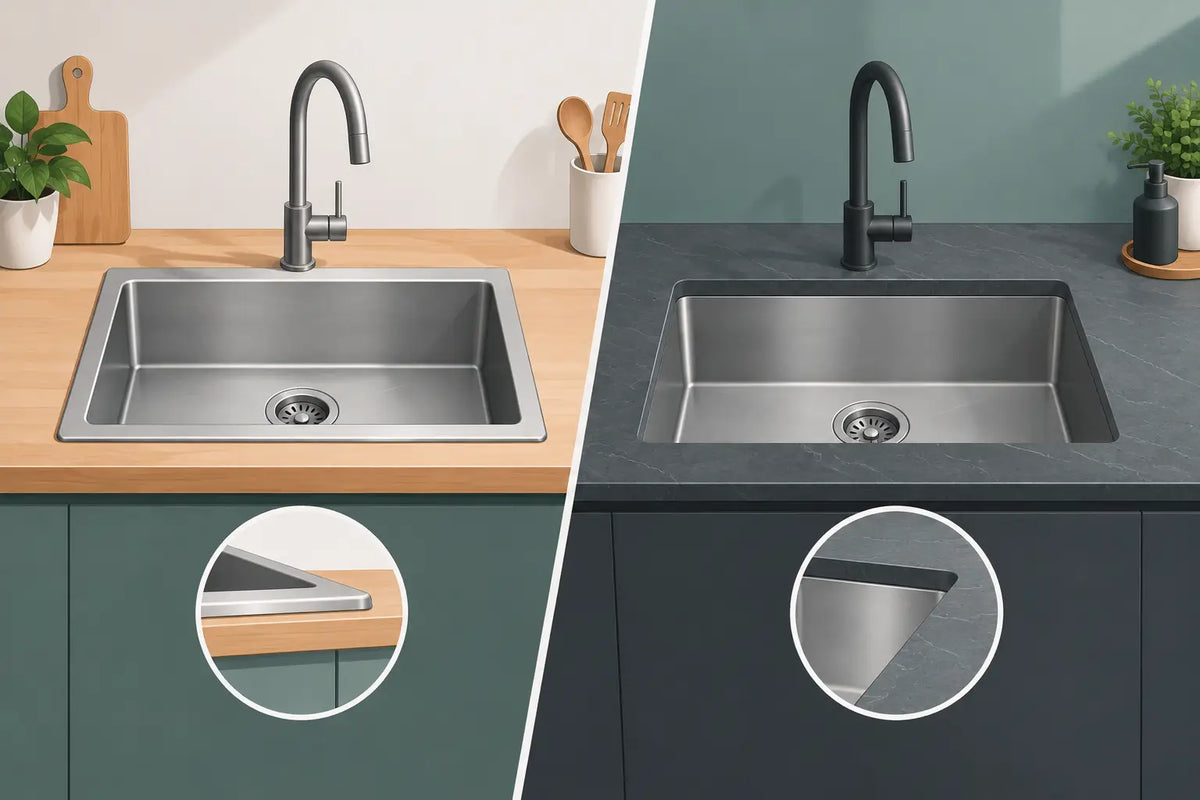
A drop-in or undermount sink can transform the look of a kitchen, but the difference is not just about style. The choice affects countertop cleanup, compatibility with the material you choose, installation complexity, and the overall project budget. Before ordering a sink or cutting into your countertop, consider the whole picture: the countertop, faucet, storage space under the sink, and your cooking habits.
For a home renovation, the undermount sink is appealing for its clean, contemporary finish. The L drop-in sink remains a very reliable, versatile, and often more affordable option. The right choice is the one that suits your kitchen, not simply the latest trend.
Drop-in or undermount sink: the key difference
A drop-in sink, also called a rimmed sink, is installed from above the countertop. Its visible rim rests on the surface and covers the edge of the cutout. This rim makes installation simple and works with a wide variety of materials, including laminate, wood, composite surfaces, and some thinner countertops.
An undermount sink is attached beneath the countertop. No rim extends over the work surface: the countertop cutout remains visible, and the sink is supported by clips, rails, or a suitable mounting system. This type of installation creates a clean line between the countertop and the basin, especially desirable with quartz, granite, marble, or solid-surface materials.
The distinction may seem simple, but it changes the user experience. With an undermount model, crumbs and water can be swept directly into the basin. With a drop-in model, the rim forms a slight divider that needs regular cleaning. In return, this rim makes installation more forgiving and better protects the edges of some materials.
Why choose an undermount sink
The L undermount sink is often chosen for its minimalist appearance. It creates a sense of continuity across the countertop and highlights a modern kitchen, especially when the faucets, handles, and appliances follow a contemporary style. It also fits very well with a large kitchen island, where the countertop becomes a central visual feature.
Its main everyday advantage is easy maintenance. After chopping vegetables or preparing a meal, it’s easy to sweep scraps into the sink with a squeegee or cloth. There’s no horizontal seam around a rim to work around. It’s a welcome detail in a kitchen used several times a day.
This option does, however, require a compatible countertop. Quartz, granite, and solid surfaces are generally good choices because they resist moisture well and provide a stable structure. A laminate countertop is not usually recommended for an undermount sink: the cut edge can absorb water, swell, or deteriorate if the seal is compromised.
L’installation must be precise. The sink’s weight, especially if it’s made of thick stainless steel or composite granite, must not rest solely on the caulking. Mechanical fasteners and support beneath the countertop are essential. An experienced installer will also check the cutout, alignment, and type of seal to prevent water leaks over time.
The cutout finish matters too
With an undermount sink, the inner edge of the countertop is visible. Manufacturers and installers can offer a straight finish, a slightly rounded one, or one with a small lip. The result should suit the kitchen’s style while also being easy to clean. A simple, smooth finish is often the best choice for a family kitchen.
The practical advantages of the drop-in sink
L’undermount sink remains a very current option. Its visible rim can provide a clean finish, especially with a black, white, or stainless steel sink that contrasts with the countertop. It works just as well in a contemporary kitchen as in a more classic setting.
Its greatest advantage is its versatility. It can be installed on almost any type of countertop, as long as you follow the cutout dimensions specified by the manufacturer. It’s an excellent option for keeping an existing countertop, fitting out a kitchen on a tighter budget, or installing a laminate surface.
The rim also makes it easier to replace the sink if needed. Since it slightly overlaps the cutout, it allows some leeway when the dimensions aren’t exactly the same as those of the previous model. In a renovation project where you want to avoid replacing the countertop, this advantage can make a real difference.
L’Maintenance requires a little more attention. Water droplets, flour, or residue can collect around the rim. Regular cleaning with a soft cloth is generally enough, but it’s best not to let water sit at the seam. Properly applied caulking protects the countertop and keeps the installation clean for longer.
Which sink material should you choose?
The installation method does not replace the choice of material. A stainless steel sink is valued for its light weight, rust resistance, and timeless style. It works equally well as a drop-in or undermount installation. For a more premium feel, choose a thicker steel and a finish that hides water spots and small scratches.
Composite granite offers a matte surface, rich color depth, and good resistance to everyday light impacts. It pairs especially well with quartz or stone countertops. However, it is heavier than a steel sink, making adequate support even more important for an undermount model.
Ceramic or fireclay sinks have plenty of character, especially in a farmhouse style. They require a cabinet structure suited to their weight and dimensions. In this case, the kitchen plan should be confirmed before ordering, because the sink directly affects the cabinet and countertop fabrication.
Installation: details to confirm before buying
Before choosing a model, measure the width of the sink cabinet, not just the countertop. A single-bowl, double-bowl, or large-bowl sink must fit inside the cabinet while leaving the space needed for the mounting hardware, drain, water lines, and a filtration or waste disposal system, if planned.
Also check the faucet location. Some drop-in sinks have a pre-drilled or drillable area, while an undermount sink generally requires the faucet hole to be made in the countertop. If you want to add a soap dispenser, a water filter, or a kitchen faucet with a pull-down sprayer, plan for these openings from the outset.
The choice of sink bowl also deserves some thought. A large single bowl easily accommodates baking sheets and pots, which is handy in a compact kitchen. A double bowl helps separate washing, rinsing, and food preparation. For family use, the choice often depends less on the size of the kitchen than on how you actually cook.
Don’t choose based on the photo alone
A photo can show an elegant sink, but dimensions determine comfort. Look at the basin depth, drain placement, and included accessories, such as a bottom grid, strainer, or fitted cutting board. A rear-positioned drain often frees up cabinet space for storage and plumbing.
Budget and durability: where to invest
A L drop-in sink often costs less to install, especially if the countertop is already in place or is made of laminate. An L undermount sink may require a larger investment, since the cutout and fasteners must be installed precisely, usually by the countertop manufacturer or installer.
That doesn’t mean an undermount sink is automatically the best buy. A quality drop-in installation with a durable sink, a good faucet, and a well-maintained seal will provide years of service. Conversely, an undermount sink that isn’t properly supported or sealed can lead to costly repairs.
To make a lasting choice, give the faucet as much consideration as the sink. A reliable faucet, a quality cartridge, and careful installation reduce the risk of leaks. Choosing compatible components from the outset helps avoid compromises once the countertop is installed.
A few frequently asked questions
Can you install an undermount sink with a laminate countertop?
This is generally not recommended. Even with a sealant, laminate edges exposed to moisture remain vulnerable. A drop-in sink is the safer choice for this material.
Is a L undermount sink harder to clean?
The basin is cleaned the same way, but the seal under the countertop needs to be checked. On the other hand, the countertop surface is often quicker to wipe down because there’s no rim to trap debris.
Which model is right for a quick renovation?
A drop-in sink is often easier to install, especially when the existing countertop is staying in place. It offers more flexibility in terms of dimensions and materials.
The best time to decide is before the countertop is made. Measure the cabinet, choose your faucet, and confirm the surface material: then you can select a sink that adds style to your kitchen without creating installation compromises.
