
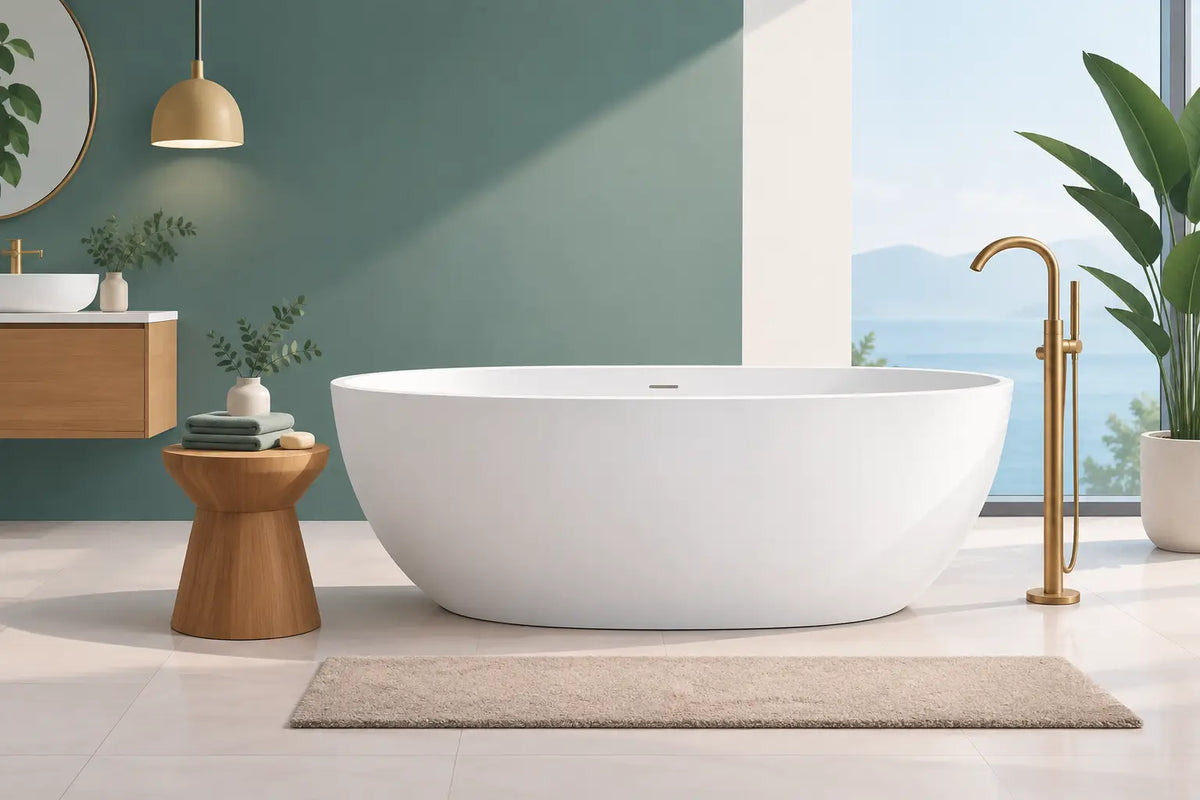
A freestanding bathtub immediately transforms the look of a bathroom. Placed against a wall, in front of a window, or in the center of the room, it creates a more refined focal point than a traditional built-in bathtub. Searches for designer freestanding bathtub deals often reflect a clear goal: to achieve this upscale look without throwing the renovation budget off balance.
However, the right purchase depends on more than the advertised discount. The shape, dimensions, material, faucet placement, and actual available space all affect long-term comfort. An attractive deal becomes a truly good choice when it suits your space, your habits, and the style you want.
Why choose a designer freestanding bathtub?
Freestanding bathtubs are appealing for their clean lines and flexible placement. Unlike a built-in model, they don’t require an apron or a finished structure around the tub. Their visual presence is lighter, making them suitable for both contemporary bathrooms and updated classic interiors.
Its advantage is also practical. The exterior remains accessible for cleaning, provided you allow enough clearance near the walls. In a large bathroom, a freestanding bathtub can become the room’s centerpiece. In a more compact space, a model placed near a wall delivers the same designer effect while limiting obstacles to movement.
Choosing a freestanding bathtub is especially suitable for homeowners who want to create a separate relaxation area from the shower. It can also enhance a full renovation when the vanity, faucets, mirrors, and accessories share the same design direction.
Deals on designer freestanding bathtubs: what to compare
A discounted price draws attention, but the product’s dimensions and features should guide the decision. Before choosing, start by measuring the room, then picture the clearance around the bathtub. You need to be able to get in comfortably, clean the surfaces, and access the connections when needed.
Useful length and depth
The most popular lengths generally range from 55 to 67 inches. A 55- or 59-inch tub can be very comfortable in a secondary bathroom or a room with limited dimensions. Models measuring 63 to 67 inches offer more room to stretch out, but require more generous planning.
Don’t rely on the exterior dimensions alone. The interior depth, backrest angle, and width at shoulder level determine how comfortable the tub is. Two bathtubs of similar length can offer very different experiences. For regular use, a deeper tub and a well-contoured backrest make a noticeable difference.
The shape that suits your layout
Oval tubs remain a safe choice for their soft, timeless look. They fit easily into modern bathrooms and create a sense of comfort. Rectangular models with rounded corners offer a more architectural look, especially when paired with black, chrome, or brushed nickel fixtures.
A back-to-wall tub is often the most efficient solution when space is limited. Its straighter back sits closer to the wall, freeing up valuable inches without sacrificing the presence of a freestanding tub. By contrast, a fully freestanding bathtub requires more clearance, but it showcases the product more in a spacious primary bathroom.
The material and finish
L’acrylic is valued for its reasonable weight, smooth surface, and ability to maintain a comfortable temperature. It is a practical material for many residential projects, especially when upstairs access or the job site layout imposes certain handling limitations.
A glossy white finish brightens the room and pairs easily with different styles. Matte lines or sculptural shapes can make a bolder statement, but they call for a cohesive selection of the other finishes. The tub should complement the vanity and shower rather than compete with them.
Check the faucet before buying
Faucets are one of the most commonly overlooked considerations when buying a freestanding bathtub. Yet they affect the tub’s placement, plumbing work, and final budget. Depending on the model you choose, you may need a floor-mounted faucet, a wall-mounted faucet, or a faucet installed on the tub rim, if the design allows.
A freestanding faucet looks very elegant with a freestanding bathtub. However, the water supply lines need to be planned in the floor. A wall-mounted faucet leaves the floor clear and makes it easier to keep the area around the tub looking tidy, but its position must be determined before the wall is finished. In either case, check the spout reach to make sure the water flows into the tub.
Also consider the drain. Its location must match the existing plumbing or the adjustments planned during the renovation. This simple check helps avoid costly changes once the product has been delivered.
When a promotion represents real savings
Promotions are especially worthwhile when you’re planning the entire bathroom. Buying items together makes it easier to coordinate the bathtub with the shower, shower base, vanity, sink, and accessories, while keeping a closer eye on expenses.
A discount on a bathtub shouldn’t mean accepting an unsuitable size or a complicated installation. For example, a larger model may seem like a great deal on sale, but become less cost-effective if it means moving a partition, modifying the heating, or redoing a significant part of the plumbing. The best price is the one that fits the project without adding unexpected costs.
It’s also worth checking what comes with the product. Local availability, warranty details, exact dimensions, and delivery terms all contribute to its true value. For a project with a tight schedule, having access to customer service that can clearly answer technical questions is just as reassuring as the discount itself.
Creating a cohesive décor around the bathtub
A designer freestanding bathtub deserves a balanced setting. If the tub has a rounded silhouette, a vanity with softened corners and an oval mirror can echo the same visual language. For a more angular bathtub, a floating vanity, a recessed niche and a shower door with clean lines will reinforce the contemporary style.
The faucets play a major role here. Chrome maintains a bright, versatile look. Matte black adds contrast to a white or mineral-inspired décor. Brushed nickel brings subtle warmth that pairs well with pale wood, beige ceramics and natural stone. L’essential is to repeat the same finish in a few key places without overloading the room.
Lighting also deserves your attention. An LED mirror, a well-placed pendant or soft wall lighting can highlight the bathtub without creating an overly cold atmosphere. In a windowless bathroom, these choices directly affect the sense of space and comfort.
Preparing for installation methodically
Before delivery, make sure the bathtub can fit through the doors, hallways and staircases. A freestanding bathtub is generally easier to install than a built-in tub, but its dimensions must be compatible with the route to the bathroom. Also protect the finished floor while moving it.
The floor must be stable and perfectly level. The bathtub may look fine at first glance, but a slight unevenness can affect drainage and the overall appearance. Have the plumbing connections handled by a qualified professional, especially if you’re changing the drain location or installing a floor-mounted faucet.
At Voda, homeowners and professionals alike can find solutions designed to create a modern, durable and well-coordinated bathroom. Take the time to compare dimensions, shape and installation requirements: a carefully chosen bathtub will remain a pleasure to use long after the sale ends.
