
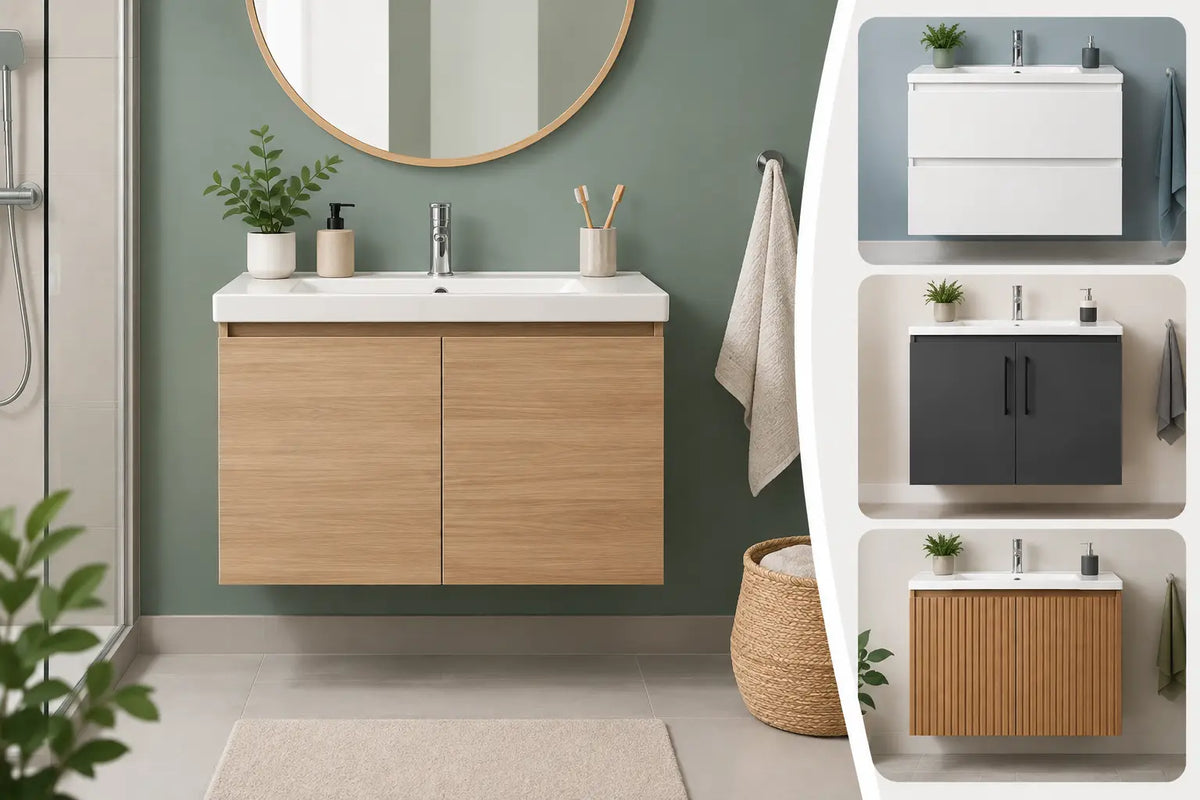
An ill-fitting vanity is noticeable every morning: doors that get in the way, impractical drawers, a cramped area around the toilet or plumbing that’s difficult to conceal. So the best vanities aren’t chosen solely for their finish or price. They should make the most of the space, support the sink, simplify storage and keep looking great despite daily exposure to moisture.
For a successful renovation, the right model is one that suits your bathroom’s actual dimensions, your routine and your preferred style. Here’s how to make a lasting choice that works just as well in a small powder room as in a family bathroom.
Start with the room’s actual dimensions
Before comparing colors and cabinet fronts, measure the available wall space, clearance for movement and the location of the plumbing outlets. The cabinet must be wide enough to let you open the doors or drawers without hitting the toilet, shower or an adjacent wall.
In a small bathroom, a 24- to 30-inch-wide cabinet can provide effective storage without making the layout feel crowded. A 36-inch vanity is often a good fit for a compact primary bathroom or a guest bathroom used every day. In a larger bathroom, 48-, 60- or 72-inch models create a more generous countertop area and allow for one or two sinks.
Depth deserves just as much attention. A model that's too deep restricts movement, especially in front of a door or in a narrow room. Conversely, a shallow cabinet can be an excellent solution in a powder room, provided you choose a compatible sink and faucet. Also check the finished height with the countertop and sink: comfort depends on the entire setup, not just the cabinet.
Check the plumbing before ordering
The position of the drain and water supply lines directly affects the interior layout. Drawer models make products easier to organize and access, but often require a cutout or a configuration designed to work around the plumbing. A cabinet with doors generally offers more flexibility during installation.
This check is especially useful when renovating older homes, where the pipes aren’t always centered. Take a photo and note the measurements before finalizing your selection. This will help you avoid on-site adjustments that unnecessarily slow down the work.
The best bathroom vanities for storage
The ideal storage solution depends less on the vanity’s size than on what you actually keep in it. A family bathroom accumulates towels, hair dryers, personal care products, beauty products, and first-aid supplies. A powder room, on the other hand, mainly needs discreet space for toilet paper, spare soap, and a few essentials.
Full-width drawers are ideal for small items and let you quickly see what’s inside. They work well for cosmetics, brushes, shaving products, and electrical accessories. Choose sturdy drawer slides and a soft-close mechanism: this detail makes the vanity more comfortable to use and helps prevent repeated impacts on the fronts.
Two-door vanities are a practical choice for storing taller products or storage baskets. They’re also often easier to fit around plumbing. In a large vanity, combining doors and drawers offers a good balance of capacity and organization.
An open vanity with an exposed shelf can make a contemporary bathroom feel visually lighter. However, it requires tidier storage. Rolled towels and decorative baskets fit right in, but everyday products are better tucked away in a closed cabinet.
Freestanding or wall-mounted: a choice of style and function
Wall-mounted vanities are popular for their modern look and visual lightness. By keeping the floor clear, they make the room feel more spacious, simplify cleaning, and are particularly well suited to small bathrooms. However, installation requires a properly reinforced wall and secure mounting. Plan for this with your installer, especially if the vanity is wide and has a heavy countertop.
A freestanding vanity has a more classic presence and is generally easier to install when walls are uneven. Its legs or base rest on the floor, which can be reassuring in a quick renovation project. However, you need to clean around and underneath the vanity, where water and dust can accumulate.
The right choice depends on your room, not on a single trend. A wall-mounted vanity enhances a minimalist, uncluttered bathroom. A freestanding model may be better suited to a family bathroom where storage capacity and ease of installation are priorities.
Choose materials designed for moisture
The bathroom is a demanding environment. Steam, splashes, temperature changes, and frequent cleaning put materials to the test. A durable vanity must have well-finished panels, protected edges, and hardware that can withstand repeated use.
High-quality engineered wood panels covered with a melamine or laminate finish offer an excellent balance of durability, maintenance, and price. They are common in contemporary vanities because they allow for convincing matte, textured, or wood-look finishes. Solid wood adds a distinctive warmth, but requires a suitable finish and more careful maintenance in very humid areas.
The countertop also affects the lifespan of the whole unit. Ceramic is easy to clean and appreciated for its crisp look. Quartz offers a dense, elegant surface that is well suited to busy bathrooms. Integrated surfaces, where the sink and countertop form one unit, make cleaning easier by reducing the seams around the basin.
Whatever the material, quickly wipe up major splashes and avoid leaving a wet towel pressed against the cabinet fronts. Even a well-designed vanity keeps its appearance better with a few simple habits.
Coordinate the vanity, sink, and faucet
A vanity is never chosen on its own. The sink shape, faucet type, and mirror determine the final balance. An undermount sink offers a classic look and an easy-to-use countertop. A vessel sink creates a more sculptural effect, but usually requires a lower vanity to maintain a comfortable height.
With a wall-mounted faucet, the countertop looks cleaner and cleaning around the sink is easier. However, this option requires plumbing to be planned inside the wall. A single-hole countertop faucet remains a practical solution, with a wide choice of finishes and a more straightforward installation.
For style, light wood finishes soften a bright white bathroom. Matte black adds contrast and a contemporary touch, especially when paired with matching faucets. Glossy or matte white remains a reliable choice in narrow rooms because it reflects light and has a subtle presence. For a cohesive result, repeat the same finish in just two or three elements, such as the vanity, mirror frame, and accessories.
Think of the purchase as a complete set
The price of the vanity is an important factor, but it doesn’t always represent the project’s total cost. Confirm what’s included: the cabinet, countertop, sink, mirror, faucets, and drain may be sold separately, depending on the model. This distinction makes it easier to compare options fairly and avoid surprises at installation.
At Voda, choosing a vanity from a range of sizes, finishes, and configurations makes it possible to create a contemporary bathroom without dealing with multiple suppliers. A cohesive selection also makes it easier to coordinate with the shower, faucets, LED mirror, and accessories.
Before ordering, check the full dimensions, door swing, mounting method, materials, and warranty terms. If your timeline is tight, also confirm availability and local delivery options. These practical details often make the difference between a smooth renovation and a project that drags on.
A good bathroom vanity should remain pleasant to use long after the work is done. Choose a size that lets the room breathe, storage that suits your habits, and a finish you’ll still want to see every day.
