
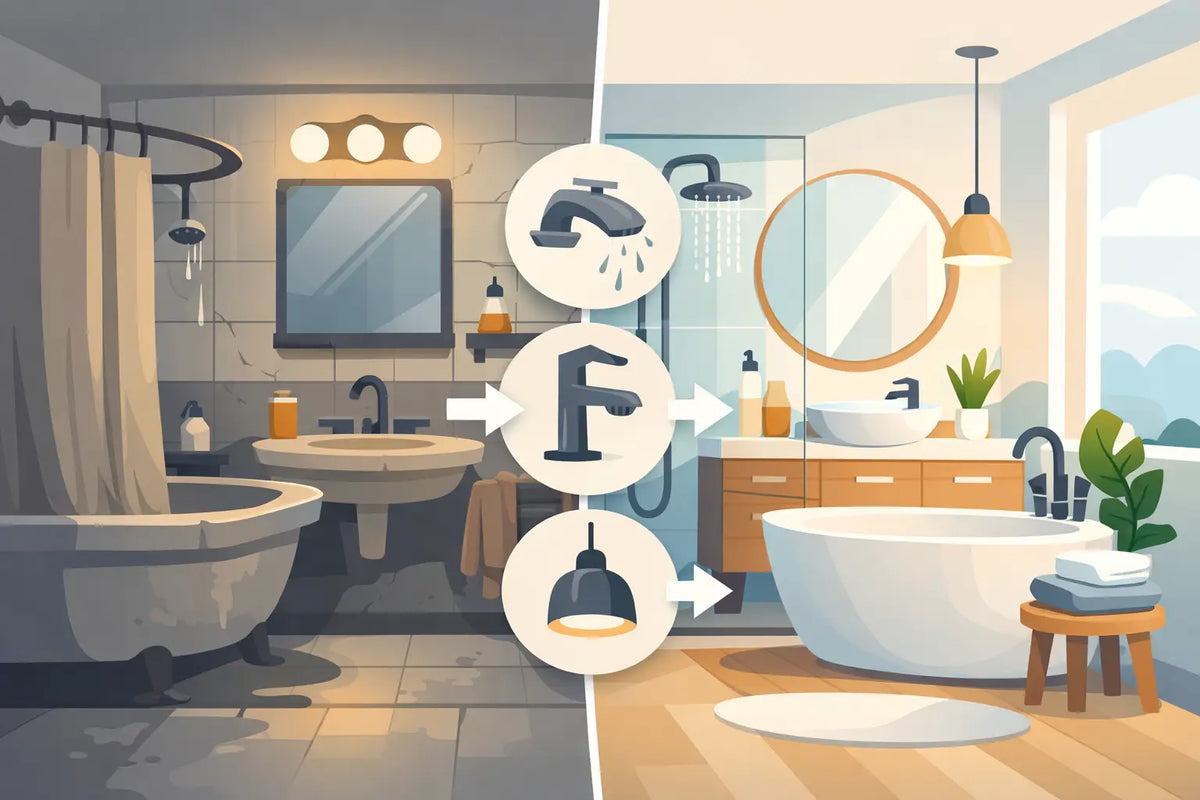
A successful renovation is measured by more than the difference between two photos. A convincing bathroom before-and-after improves everyday routines: moving around without bumping into things, storing items without cluttering the countertop, enjoying a comfortable shower, and cleaning surfaces effortlessly. It is this combination of style, durability, and functionality that truly transforms the room.
The good news is that you do not always need to relocate all the plumbing or enlarge the space to achieve a spectacular result. By targeting the components that structure the bathroom, you can modernize its appearance, improve comfort, and better control your budget.
Bathroom Before and After: Start with the Right Assessment
Before choosing a freestanding bathtub, wall-mounted vanity, or black faucets, look at what no longer works. A bathroom can seem dated because of several details that have accumulated over time: insufficient lighting, a cabinet that is too deep, worn grout, a shower that is difficult to clean, or a lack of storage. An assessment helps you avoid investing in a decorative element when the real problem is functional.
Also take precise measurements of the room, door openings, windows, and water connections. In a small space, a few inches make a real difference. A 36-inch vanity may be perfect in a family bathroom but too imposing in a narrow powder room. Similarly, a sliding shower door often frees up more space than a pivoting door.
The existing layout deserves particular attention. Keeping the toilet, shower, and vanity in the same locations generally reduces plumbing work and unexpected issues. Moving these elements is still possible, but the decision should be justified by a clear benefit: better circulation, a more spacious shower, or significantly more effective storage.
1. Make the Shower the Focal Point of the Transformation
In many projects, the shower creates the greatest visual impact in before-and-after photos. Replacing an outdated enclosure with a streamlined shower base, easy-care walls, and a glass door immediately creates a feeling of space and cleanliness.
The choice of shower base depends primarily on the layout. A rectangular base suits long bathrooms, while a square format may be ideal in a compact room. For a more accessible renovation, a low-threshold base makes entry easier without requiring the scale of a fully curbless shower. The latter is very elegant, but it requires precise planning for the slope, waterproofing, and drainage.
Transparent glass visually enlarges the room and highlights the wall covering. Textured glass can, however, provide more privacy. For easier maintenance, prioritize durable materials and surfaces that minimize grout lines. The fewer recesses there are, the better the shower will look over the years.
2. Choose a Vanity Suited to Real Life
The vanity should be chosen for everyday use before style. In a primary bathroom used by two people, a cabinet with two sinks or a long countertop reduces morning waiting. In a powder room, a compact vanity with integrated storage is often more practical than a large cabinet that blocks the passage.
Deep drawers are particularly useful for organizing personal-care products, appliances, and linens. They make contents more accessible than a large lower cabinet where everything accumulates at the back. A wall-mounted vanity creates a light, contemporary look while making the floor easier to clean. A floor-standing model, however, may be more suitable if you want to maximize storage or conceal certain wall constraints.
The finish also plays an important role. Light wood warms up a white or gray bathroom. Matte black creates strong contrast but requires careful coordination of accessories and lighting. Neutral tones remain a safe choice when you want a room that will remain visually appealing over time and can easily be updated with a mirror or new faucets.
3. Modernize the Faucets Without Overlooking Quality
Faucets are a small element that can significantly change the perceived quality of a bathroom. A streamlined shape and a finish coordinated with the shower, handles, and accessories make the bathroom feel more thoughtfully designed. Chrome, black, brushed nickel, or gold: the best choice depends on the desired atmosphere, as well as your tolerance for water spots and maintenance.
Chrome remains versatile, bright, and easy to integrate. Matte black creates a contemporary, graphic result, especially against a light background. Brushed nickel is appreciated for its softer appearance and its ability to conceal everyday marks. You do not have to use exactly the same finish everywhere, but the combination should look intentional. Two well-chosen finishes can work well. Four different finishes rarely create a harmonious result.
Beyond appearance, check the quality of the cartridge and the availability of replacement parts. Reliable faucets are an investment that should last. At Voda, cartridges guaranteed for life provide meaningful reassurance for homeowners who want to invest in products designed for everyday use.
4. Rethink the Lighting Around the Mirror
A ceiling light with a single fixture often casts shadows on the face. This is one of the most common flaws in older bathrooms. For a more comfortable bathroom before-and-after transformation, combine general lighting with a well-placed light source near the mirror.
An LED mirror offers a clean, contemporary solution, especially when space is limited. It improves visibility for shaving, applying makeup, and personal care while adding a modern signature. However, check the colour temperature and light output. Light that is too cool can create a clinical atmosphere, while overly warm light can distort colours.
In a large bathroom, sconces on either side of the mirror remain an excellent option. They distribute light more evenly. The goal is not to add as much light as possible, but to light the right areas.
5. Add Storage Without Weighing Down the Room
Clutter makes a bathroom look dated faster than most finishes. Even a beautiful vanity loses its impact when the countertop is covered with bottles, cords, and towels. A shower niche, divided drawers, a mirrored cabinet, or a tall cabinet can solve this problem without changing the room’s footprint.
A shower niche is particularly effective in full renovations. It replaces surface-mounted shelves, frees up shower space, and creates a clean finish. Plan its height according to the sizes of your everyday products, and choose a location that does not interfere with the faucets.
For towels, a heated towel rack combines light storage with comfort. It is not essential for every project, but it makes particular sense in a primary bathroom or a poorly ventilated room. A warm towel after a shower is a simple detail that creates a high-end feel.
6. Use Wall and Floor Coverings to Make the Room Look Larger
Wall and floor coverings form the permanent backdrop of a bathroom. Very trendy choices can be appealing, but they deserve careful consideration: replacing faucets is simple, while retiling is much more involved. For a durable foundation, large-format tiles, mineral tones, and subtle patterns generally stand the test of time better.
In a small room, extending the same covering from the floor up to the shower wall can create an appealing visual continuity. Grout lines are less noticeable, and the space appears more cohesive. Conversely, an accent wall can define the shower area or highlight the vanity. Everything depends on the natural light, ceiling height, and desired level of contrast.
Do not forget safety. A bathroom floor should provide good traction, particularly near the shower and bathtub. The most beautiful finish loses its appeal if it becomes slippery when wet.
7. Set Aside a Budget for the Invisible Elements
The most successful transformations do not devote the entire budget to visible elements. Waterproofing, ventilation, connections, and wall preparation protect your investment. A beautiful shower installed on a poorly prepared base can lead to costly repairs long before its style becomes outdated.
Allow some room for unexpected issues, especially in an older home. Once the walls are opened, plumbing that needs repair or inadequate ventilation may be uncovered. This budget reserve lets you make the right choices without having to reduce the quality of an essential element at the last minute.
8. Finish with Coordinated Details
Accessories should not be chosen hastily. Towel bars, hooks, toilet-paper holders, soap dispensers, and handles all contribute to the final cohesion. They may seem secondary, but they are the elements you use every day.
Choose them after finalizing the main components: vanity, shower, faucets, and mirror. This will help you avoid buying accessories that clash with the finishes or do not fit the room’s actual dimensions. The result does not need to be busy to be elegant. A few well-coordinated elements are enough.
A transformed bathroom should be enjoyable on installation day but also easy to live with five years later. By focusing on a well-designed shower, durable materials, useful storage, and cohesive visual choices, your before-and-after project becomes an investment you can enjoy every morning.
